Monaco Residency Guide for High-Net-Worth Individuals (2026)
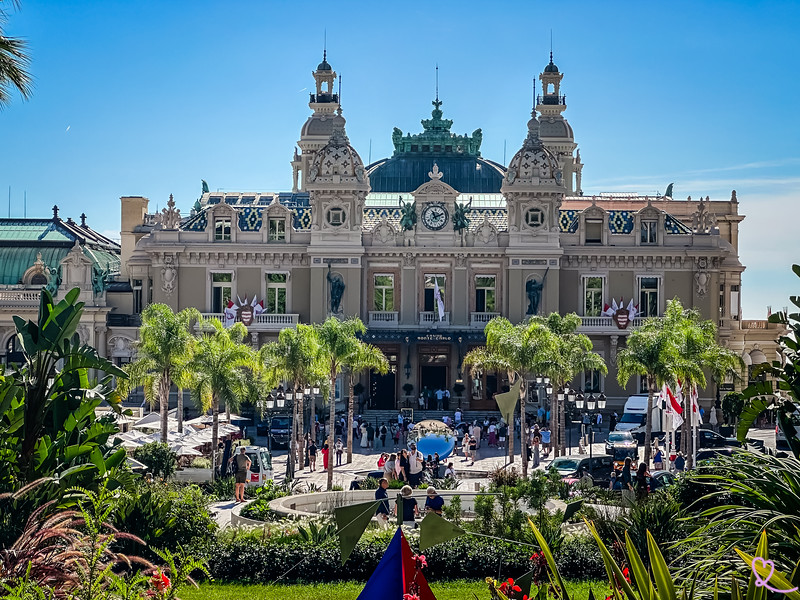
Monaco occupies less than two square kilometres of the French Riviera coastline, yet it hosts one of the highest concentrations of wealth anywhere in the world. For high-net-worth individuals considering a change of residence, it remains one of the most sought-after destinations in Europe, not merely for its tax advantages, but for the combination of security, infrastructure, and lifestyle that few jurisdictions can match.
This guide covers everything you need to know about obtaining Monaco residency in 2026: the types of permits available, the full application process step by step, the financial and banking requirements, the 183-day physical presence rule, how Monaco compares to alternative low-tax residency jurisdictions, and the practical role that Amberlake Partners plays in facilitating the transition for our clients.
Why Monaco Attracts High-Net-Worth Residents
The motivations vary by individual, but several factors consistently appear among those who choose Monaco:
Zero Personal Income Tax
Monaco imposes no personal income tax on residents, no tax on employment income, investment income, dividends, interest, or rental income received outside Monaco. There is also no capital gains tax and no wealth tax. For individuals with significant investment portfolios or business income, this is a material financial advantage over high-tax European jurisdictions. The one important exception: French nationals residing in Monaco remain subject to French income tax under the 1963 Franco-Monégasque tax convention.
Exceptional Security
Monaco has one of the lowest crime rates of any densely populated territory in the world. The principality has an exceptionally high ratio of police officers to residents, and the entire territory is covered by an extensive CCTV network. Many residents cite this as the defining quality-of-life factor, particularly those with families.
Strategic Location
Monaco is seven kilometres from Nice Côte d'Azur International Airport, which offers direct connections to major European cities, the Middle East, and transatlantic routes. The Italian border is less than ten kilometres away. For internationally mobile individuals, Monaco functions as an efficient hub rather than a remote retreat.
Stability and Legal Certainty
As an independent sovereign state under the protection of France, Monaco has operated under a stable constitutional monarchy since 1911. It has maintained its tax framework for decades without the political volatility that has affected the residency programmes of several competing jurisdictions. For long-term planning, this consistency is significant.
Quality of Life and International Community
Monaco hosts a genuinely international resident community, approximately 130 nationalities, with excellent international schools, world-class healthcare, a vibrant restaurant and cultural scene, and a calendar of prestigious events from the Formula 1 Grand Prix to the Monte-Carlo Opera season. English is widely spoken, which lowers the practical barrier for anglophone relocators significantly.
Monaco vs Other Low-Tax Residency Jurisdictions
Before committing to Monaco, most high-net-worth individuals assess it alongside alternatives. Here is a comparative overview of the most commonly considered options:
| Jurisdiction | Income Tax | Min. Physical Presence | Property Cost | European Location |
|---|---|---|---|---|
| Monaco | None (non-French nationals) | 183 days/year | Very high (€30k–€100k/m²) | Yes, French Riviera |
| Andorra | 10% flat rate | 183 days/year | Moderate | Yes, Pyrenees |
| Malta (GRP) | 15% on remitted income | 90 days/year | Moderate | Yes, Mediterranean |
| UAE (Dubai) | None | ~183 days/year (varies) | Moderate–high | No |
| Switzerland | Lump-sum taxation (negotiated) | 183 days/year | High | Yes |
Monaco's combination of zero personal tax for non-French nationals, a central European location, exceptional safety, and genuine lifestyle quality makes it the top choice for many, provided the applicant can absorb the cost of accommodation, which is substantially higher than in any competing jurisdiction. For UK residents specifically, we have written a dedicated guide on why UK HNWIs are increasingly considering Monaco as their destination.
Types of Monaco Residency Permits
Monaco issues residency permits, known as the Carte de Séjour, in three categories, each reflecting the duration and stability of the resident's connection to the principality:
Temporary Residency (1 Year, Renewable)
Issued to first-time applicants who meet all requirements. Renewable annually upon demonstration of continued compliance with residency conditions. After three years of holding a temporary permit, applicants become eligible for the ordinary permit.
Ordinary Residency (3 Years, Renewable)
Available after three continuous years of temporary residency. Renewable every three years. Represents a more established resident status and involves somewhat less frequent administrative interaction with the authorities.
Privileged Residency (10 Years)
Granted after ten years of continuous ordinary residency, or in exceptional circumstances such as significant economic contribution to Monaco, marriage to a Monegasque national, or other special factors considered by the authorities. This is the most stable form of residency short of Monegasque citizenship, which is extremely rare and not available by investment or residence alone.
Residency Requirements in Detail
Accommodation
You must demonstrate that you have secured appropriate accommodation in Monaco prior to applying. This can be either:
- Purchase: A property deed in your name (or that of a qualifying legal entity) for a Monaco property.
- Rental: A minimum one-year rental contract registered with the Monaco Tax Department. The lease must be in your name and the property must be of sufficient size for your family.
Accommodation cannot be shared with the landlord (i.e., you must have exclusive use). For an overview of the Monaco property market and what to expect in terms of pricing and districts, our guide to Monaco real estate investment is a useful starting point.
Financial Means
There is no officially published minimum wealth threshold, but in practice applicants must open an account at a Monaco bank and deposit a substantial sum, typically a minimum of €500,000, to obtain the bank attestation required for the application. The bank will issue a letter confirming your financial standing. Employed individuals may supplement this with an employment contract; business owners may present company accounts.
Criminal Record
You must provide a certificate of good conduct (police clearance certificate) from your country of nationality and from every country where you have resided for more than six months during the past ten years. These certificates must typically be no more than three months old at the time of submission and must carry an apostille if issued outside Monaco or France. Foreign documents must be translated into French by a certified translator.
Health Insurance
Comprehensive health insurance valid in Monaco and the Schengen Area is required. Once resident, you may opt into Monaco's national health system (SCAS, Social Providences Caisse des Assurances Sociales) depending on your employment status.
Step-by-Step: The Monaco Residency Application Process
The 183-Day Rule: Tax Residency in Practice
Simply holding a Monaco Carte de Séjour does not automatically make you a tax resident of Monaco if your home country applies its own residency tests. Tax residency is determined by the rules of the jurisdiction you are leaving as much as by Monaco's own rules.
Most Western European countries and the US apply a version of the following tests to determine whether an individual has ceased to be a tax resident:
- Days present: The 183-day rule applies in both directions. You should spend fewer than 183 days per year in your former country of residence, and at least 183 days (or demonstrate a stronger connection) in Monaco.
- Centre of vital interests: Many countries look beyond the day count to where your family home, principal economic activity, and social connections are located. Moving your family, closing or relocating your business interests, and establishing genuine social ties in Monaco strengthens your case.
- Habitual abode: Your habitual abode should demonstrably be Monaco, meaning you sleep there regularly and treat it as your primary home, not just a place you visit to accumulate days.
Monaco authorities take physical presence seriously. The principality's small size and extensive monitoring infrastructure mean that prolonged absences can be noted. We strongly recommend keeping a contemporaneous diary of your movements, with supporting evidence (boarding passes, hotel bills, bank card transactions), particularly during the first few years of residency when your former country of tax residence may scrutinise your position.
For US citizens: The US taxes its citizens on worldwide income regardless of where they reside. Becoming a Monaco resident does not eliminate US tax obligations for American nationals, it may, however, significantly reduce the overall tax burden depending on the specific income types involved and applicable tax treaty provisions. American residents of Monaco should work with a US CPA specialising in expatriate taxation. Amberlake Partners can manage your portfolio in a FATCA-compliant structure and coordinate with your US tax advisor. See our guide to European property financing for Americans for more on the US-specific considerations.
Opening a Monaco Bank Account: What to Expect
Monaco has a concentrated private banking ecosystem, with institutions including Société Générale Private Banking Monaco, Julius Baer, CFM Indosuez, Barclays Monaco, and BNP Paribas Wealth Management among the major players. All operate to high standards of compliance and conduct thorough Know Your Customer (KYC) and Anti-Money Laundering (AML) onboarding procedures.
For prospective residents, the key points are:
- Introduction matters: Cold approaches to Monaco private banks are rarely successful. Most relationships begin through an introduction from a trusted intermediary, a lawyer, an existing client, or a wealth management firm with established banking relationships. Amberlake Partners regularly facilitates banking introductions as part of the relocation support we provide.
- Minimum assets: Monaco banks generally serve clients with a minimum of €500,000 to €1 million in investable assets. Some have higher thresholds. The precise minimum varies by institution and relationship.
- Onboarding timeline: Expect the KYC process to take four to eight weeks. The bank will require proof of identity, proof of address, source of wealth documentation, and potentially tax returns or business accounts depending on the complexity of your financial profile.
- Account attestation for residency: Once the account is open and the initial deposit made, the bank will issue an attestation letter, a standard document confirming your account and financial standing, which forms part of your residency application dossier.
Family Members: Bringing Dependents to Monaco
Each family member wishing to reside in Monaco must submit a separate application. The process is broadly the same, with the following nuances:
- Spouses: Spouses apply concurrently or subsequently, with their own documentation. The principal applicant's financial means are typically sufficient to cover the household.
- Minor children: Birth certificates and, where relevant, custody documents are required. Minor children living with a resident parent generally receive residency without difficulty.
- Adult dependants: Adult children or other dependants must demonstrate their dependency status and submit independent documentation including their own criminal record clearances.
- Domestic staff: Household employees wishing to live in Monaco will require their own residency and work permits, typically sponsored by the employing resident.
Monaco has excellent international schooling options, including the International School of Monaco (ISM) and several French schools operating the national curriculum, making it genuinely practical for families with school-age children.
Common Mistakes to Avoid
- Starting too late: The combination of property search, bank account opening, document authentication, and application processing means that the timeline from decision to residency card is realistically five to seven months for most applicants. Begin planning well in advance of your target relocation date.
- Underestimating the documentation burden: Criminal record certificates from multiple countries, apostilles, certified translations, and bank attestations all require time to obtain. Missing a single document can delay your application by weeks.
- Not severing ties with the previous country of residence: Becoming a Monaco resident on paper while maintaining a home, family, or business presence in a high-tax jurisdiction will likely result in continued tax liability in that jurisdiction. Genuine relocation requires genuine change.
- Choosing accommodation too quickly: Monaco's rental market moves quickly and the principality is small. Take time to understand the different districts before committing. Our article on Monaco's property districts gives a detailed breakdown of the lifestyle and pricing characteristics of each area.
- Not planning for ongoing compliance: The Carte de Séjour must be renewed, and the 183-day presence requirement must be maintained consistently. Build this into your annual planning from the outset.
How Amberlake Partners Supports the Relocation Process
Amberlake Partners is a Monaco-based independent asset management firm, regulated by the CCAF and registered with the SEC for US clients. We have accompanied numerous high-net-worth individuals through the Monaco relocation process and understand both the financial and practical dimensions of the transition.
Our support typically covers:
- Banking introductions: We facilitate introductions to Monaco private banks suited to your asset profile, supporting the account-opening process and the issuance of the bank attestation required for your application.
- Portfolio management: We manage client assets in Monaco, providing the financial means documentation required for residency and, for US clients, ensuring the structure is FATCA-compliant.
- Property network: We can connect you with trusted Monaco real estate agents and notaries with experience serving international clients.
- Legal and tax advisor introductions: We work with a network of Monaco-based lawyers and international tax specialists and can make appropriate introductions depending on your nationality and complexity of affairs.
- Ongoing wealth management: Once resident, we provide continuous investment management, financial planning, and advisory services, acting as your dedicated external asset manager. For more on the advantages of this model versus a private bank, see our article on why an independent asset manager outperforms a private bank for residents with complex needs.
Frequently Asked Questions
How long does it take to get Monaco residency?
The full process, from beginning property search to receiving your Carte de Séjour, typically takes between three and six months. The Monaco Police Department's background check alone can take six to eight weeks after submission. Having all documentation prepared in advance and working with advisors familiar with the process significantly reduces delays.
How much money do I need to become a Monaco resident?
There is no officially published minimum wealth requirement, but in practice applicants are expected to demonstrate that they can support themselves without working in Monaco. Most banks require a minimum deposit of €500,000. Accommodation is a significant cost, Monaco rents for a modest one-bedroom apartment typically start around €30,000–€50,000 per year.
Do you have to live in Monaco full-time to maintain residency?
You must be physically present in Monaco for at least 183 days per year to maintain tax residency and satisfy permit renewal requirements. Monaco authorities can verify physical presence, and extended absences without justification can affect renewal. Keep contemporaneous records of your movements.
Do Monaco residents pay any taxes?
Monaco imposes no personal income tax, no capital gains tax, and no wealth tax on residents, with one exception: French citizens residing in Monaco remain subject to French income tax under the 1963 Franco-Monégasque convention. All other nationalities benefit fully from Monaco's zero personal tax regime.
Can I work in Monaco as a resident?
A Carte de Séjour does not automatically grant the right to work in Monaco. If you wish to be employed or run a business, you must obtain a separate work or professional permit. Many Monaco residents are financially independent and do not require local employment authorisation.
Is Monaco residency better than Andorra, Malta, or Dubai?
Each jurisdiction has distinct advantages. Monaco offers zero personal income tax (for non-French nationals), outstanding safety, a central European location, and unmatched prestige, but it is the most expensive option for accommodation. The right choice depends on your lifestyle preferences, travel patterns, asset base, and nationality.
What documents are required for the Monaco residency application?
Core documents include: valid passport, birth certificate (French translation), proof of accommodation, bank attestation, criminal record certificates from all relevant countries (apostilled and translated), health insurance certificate, and completed application form. All foreign documents must be apostilled and translated into French by a certified translator.
Can family members get residency at the same time?
Yes. Spouses and dependent children can apply alongside the primary applicant, each submitting their own documentation. The financial means assessment can take into account the household as a whole.
Conclusion
Monaco residency is not simply a tax strategy, it is a comprehensive lifestyle and financial decision that, when properly planned, delivers tangible advantages across security, quality of life, and long-term wealth preservation. The process is thorough and demands careful preparation, but it is well-trodden and reliably achievable for qualifying individuals with the right support.
Amberlake Partners works with clients at every stage of this process, from initial feasibility assessment through to ongoing wealth management as a Monaco resident. If you are seriously considering Monaco residency, we welcome a confidential conversation to discuss your specific situation and the steps involved.
Disclaimer: This guide is for informational purposes only and does not constitute legal or financial advice. Residency and tax regulations can change; for personalised guidance, please consult qualified legal and tax professionals.